










A Message by Bishop Mark
The visit of the Magi to adore the Christ Child began with an Epiphany. The Magi brought gifts that were “fit for a king.” Their gifts represent the Holy Child’s identity: gold for Christ’s Kingship, incense for His Divinity, and myrrh for His Sacrifice on the Cross.
The Feast of Epiphany was traditionally celebrated as the twelfth night of Christmas, on January 6th. In the United States, the Feast of the Epiphany is celebrated this year on Sunday, January 4, 2026.
The blessing of homes (or even our schools, or places of employment, etc.) on the feast of the Epiphany reminds us that our homes are sacramentals. According to the Catechism, sacramentals make us more mindful, receptive, and cooperative with God’s grace. This blessing also reminds us that Christ is the One who enlightens our hearts and homes with His love. He is the source of our hope, our comfort and our joy.
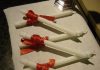
Marking doorways with blessed chalk is also a witness of faith. Chalk is used to mark above the main door of our homes and, if possible, over exterior doors of churches, schools and other buildings where the visible sign of a blessing would help us remember that all who dwell in our homes are consecrated to the Lord.
In the Diocese of Altoona-Johnstown, it is recommended that during the Christmas season, this consecration should include a prayer intention for an increase of vocations to the Priesthood, Diaconate and Consecrated Life in the Diocese of Altoona-Johnstown.
Initials of the legendary names of the Magi; Caspar, and Balthasar, remind us of the traditional Latin intercessory prayer: Christus mansionem benedicat which means, May Christ bless this house. It reminds us that everyone is called or invited to meet the Lord Jesus. And we should always be ready to welcome him to visit with us in our homes. Every visitor at our door is made in the image and likeness of God, even when that image looks like it could use some cleaning.
The traditional house blessing during the Christmas season is inscribed over the main door of a house while saying the words May Christ bless this house. And using an ordinary piece of chalk, the head of the family makes the following inscription: + 20 + C + M + B + 25. The numerals represent the current year and change each year. The four crosses remind us of the four seasons of the year.
It is also customary for Holy Water to be sprinkled on the lintel of the door. The blessing may be extended by blessing each room with Holy Water. If a priest or deacon is present, he leads the closing prayer. Otherwise, the head of the family recites the following:
Blessed be all the rooms of this home. May each of them be holy and filled with the spirit of happiness and peace, love and affection. May the spirit of pardon and affection reside with us and be always ready to heal our divisions. May the spirit of joy and laughter, hope and faith, playfulness and prayer, love and compassion be perpetual guests in our home. May God’s holy blessing rest upon us all, in the name of the Father, and of the Son, and of the Holy Spirit. Amen.
Click HERE for more information about the tradition and meaning of a house blessing at Christmas time.